

Simpan’s Co-Founder, Nicholas Hilman, was invited as one of the guest speakers at Indonesian Blockchain Week, held on 11 December at the Jakarta International Convention Center. The panel, focused on tokenized finance, explored how tokenization, stablecoin liquidity, and on-chain infrastructure are reshaping global markets—and what Indonesia needs to unlock this next phase of institutional innovation.
Nicholas joined the conversation as Simpan prepares to launch its tokenized reksa dana in partnership with D3Labs, marking one of the first real-world asset (RWA) tokenization initiatives led by an Indonesian asset manager.
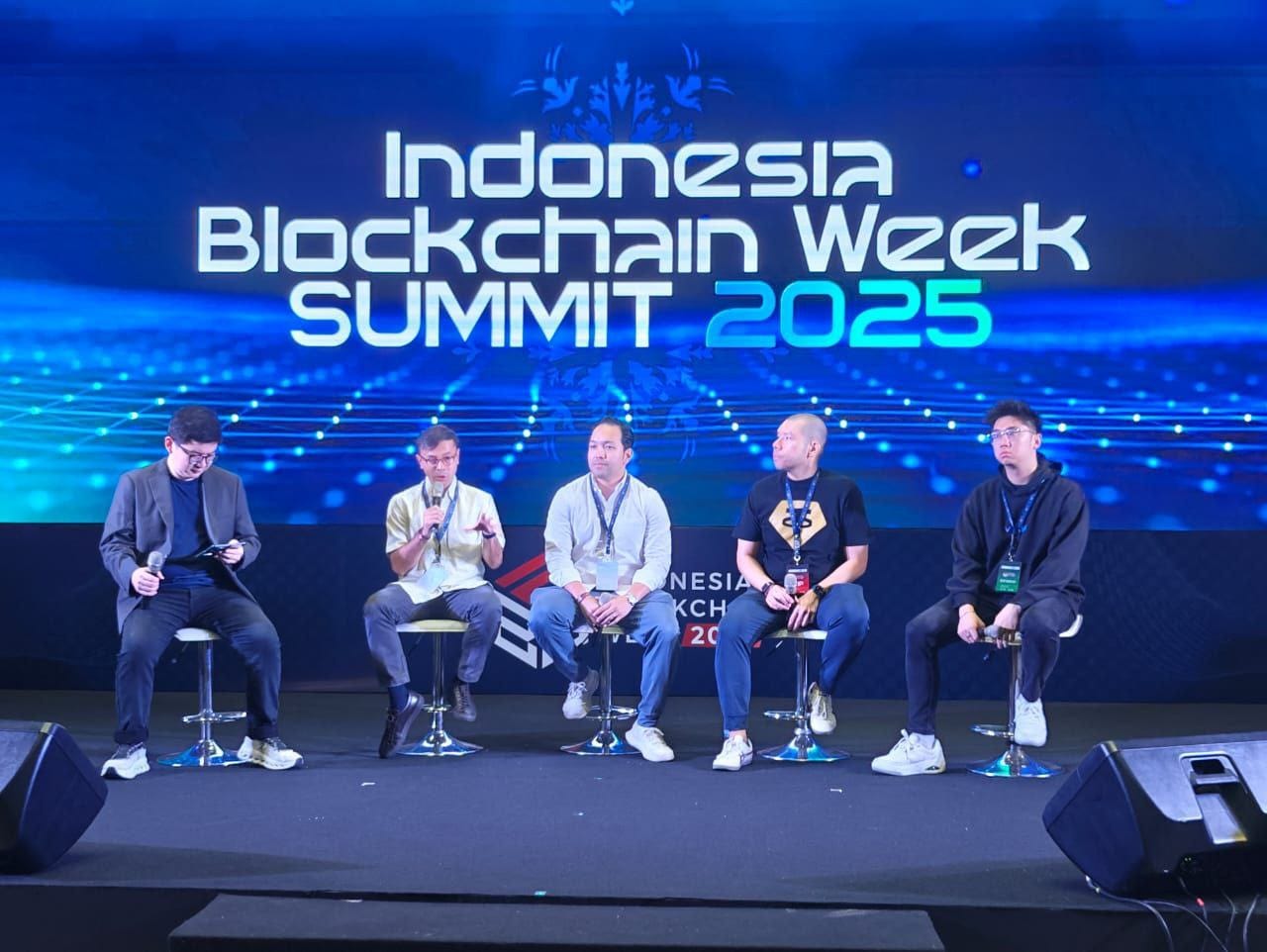
During the discussion, Nicholas highlighted how tokenized investment products differ not in what they hold, but in how they are delivered. Much like the evolution from mutual funds to ETFs, tokenization is a new wrapper around familiar underlying assets—unlocking efficiencies that traditional infrastructure cannot match.
He noted that today’s market conditions make income-yielding assets particularly compelling for tokenization, whether that’s a highly liquid money market fund or a portfolio of private credit and fixed income instruments. With on-chain settlement, fractional ownership, 24/7 transferability, and programmable compliance, tokenized securities have the potential to dramatically expand access for both retail and institutional investors. This is especially relevant in Indonesia, where crypto adoption is high but mutual fund penetration remains below 4%.
Nicholas also underscored the importance of secure infrastructure in order for tokenization to become mainstream—from institutional-grade custody and audited issuance contracts to reliable oracle pricing and on-chain identity layers. For tokenization to scale, the industry must adopt clear standards for custody, settlement, and interoperability, mirroring the rigor of the traditional capital markets.
For Indonesia, Nicholas is optimistic that tokenization can serve as a catalyst for broader economic development. He argues that tokenization enables radical transparency and greater democratization in project financing. Through fractionalization, large-scale public infrastructure projects—such as roads and bridges—can meaningfully broaden participation to retail investors, while ensuring that proceeds are deployed and tracked transparently.
This discussion underscores our commitment to advancing Indonesia’s investment landscape. With our upcoming tokenized reksa dana, we’re introducing global-grade infrastructure and greater transparency to expand access for local investors.